
Gas Leak Detection Chicago, IL — Pinpointed. Proven. Documented.
Not “somewhere in the house.” Professional gas leak detection in Chicago means the exact fitting, the exact joint, the exact section of pipe — found with calibrated instruments, confirmed under pressure, and handed to you in a written report. In a city running on century-old piping, guessing is the expensive option.
⚠ Emergency, or a booking?
Two different situations — here’s the honest split.
- Strong smell right now? That’s an emergency, not an appointment. Leave the building, then call Peoples Gas at 1-866-556-6002 or 911 from outside.
- Faint smell that comes and goes? Bill creeping up? Utility said “there’s a leak” but not where? That’s a detection visit — book us.
- Not sure which you are? Call. We’ll tell you honestly in ninety seconds — even if the answer is “hang up and dial the utility first.”
Gas Leak Detection in Chicago, IL
A faint smell that comes and goes in a Lakeview courtyard building. A gas bill creeping upward in a Portage Park bungalow with no usage change. A sulfur trace near the meter bank of a Bridgeport three-flat that the utility visit couldn’t pin down. Gas leak detection in Chicago, IL exists because this city’s piping hides its problems well — joints buried behind a century of plaster, slow weeps too small to smell consistently, and sewer gas doing a convincing impression of the real thing. Between aging threaded joints, renovation-era splices nobody documented, and basements that swallow odors, guessing is the one move that never pays here. Instruments settle it — usually within the hour.
What Are the Warning Signs of a Gas Leak in Chicago?
The calls that fill every gas leak detection Chicago schedule start with one of these eight signs. The right response depends on which one you’ve got — so here’s the honest triage, sign by sign.
| Sign | What it usually means | Urgency | Your move |
|---|---|---|---|
| Strong rotten-egg smell indoors | Active leak reaching odor threshold — mercaptan doing its job | LEAVE NOW | Out first. Utility or 911 from outside. No switches. |
| Hissing near a pipe, valve, or meter | Pressurized gas escaping a fitting — leaks big enough to hear are big enough to fear | LEAVE NOW | Same protocol. Audible = urgent, full stop. |
| Faint smell that comes and goes | Intermittent leak breathing with temperature, wind, or system pressure | 24–48 HRS | Log when and where. Book detection — the pattern is half the diagnosis. |
| Gas bill climbing with no weather to blame | Slow Grade 3 leak bleeding money — often below smell threshold | 24–48 HRS | Pressure test. An hour with a manometer settles it. |
| Yellow or orange flame on stove or furnace | Incomplete combustion — a CO risk flag as much as a gas one | 24–48 HRS | Stop using the appliance. Book a combustion + leak check. |
| One dead strip of grass or bubbling puddle | Buried service line leaking — gas starving roots and venting through soil | 24–48 HRS | Don’t dig, don’t ignore. Buried-line detection, JULIE 811 before any excavation. |
| Headaches or dizziness that ease outdoors | Possible exposure — gas displacing oxygen, or CO from bad combustion | LEAVE NOW | Get everyone out, including pets. Medical check, then detection. |
| Hissing meter or smell only outside | Often the utility’s side of the line — and their responsibility to fix, free | SAME DAY | Call Peoples Gas or 311 first. We handle whatever turns out to be on your side. |
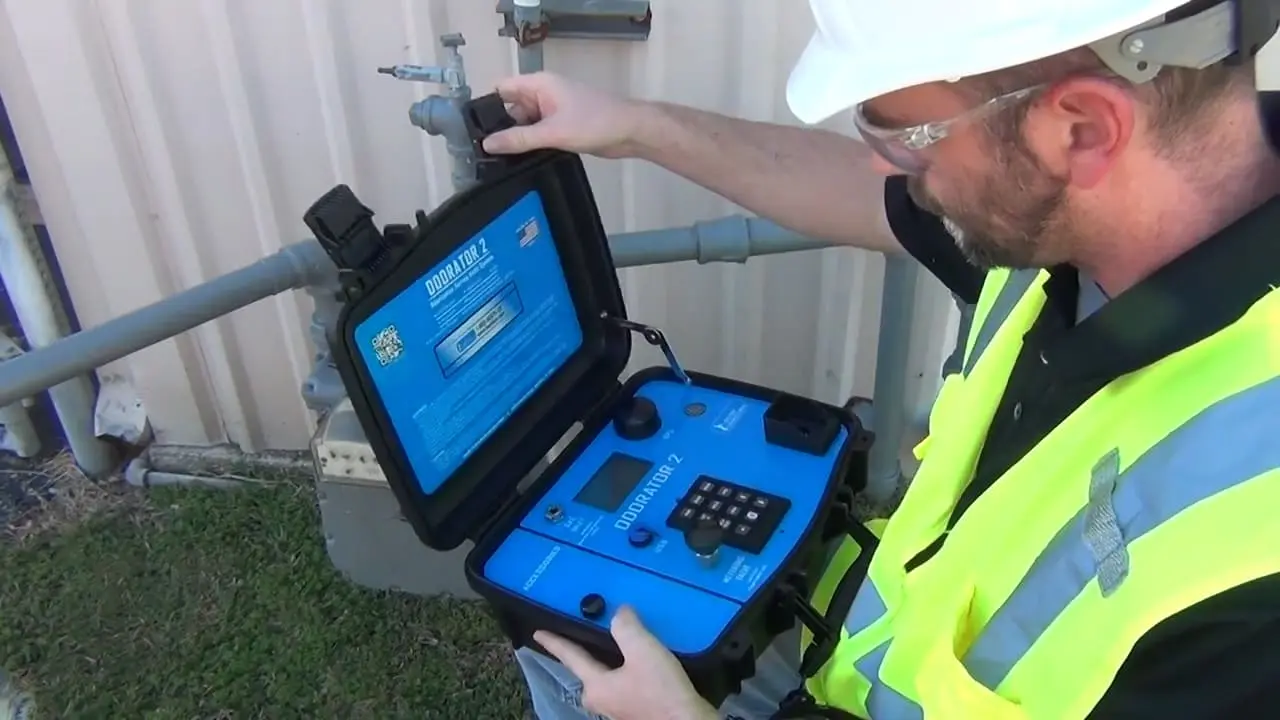 Electronic sweep — Chicago, IL
Why Is Gas Leak Detection in Chicago Its Own Skill?
Because in this housing stock, where the smell is, is not where the leak is. Professional gas leak detection Chicago, IL properties need has to account for how this city was built: balloon-frame walls in the Bungalow Belt carry gas a full story from the leaking fitting before your nose catches it — the smell in the upstairs bedroom can start at a basement coupling. Clay-heavy soil across the South and West Sides shifts with every freeze-thaw cycle, working buried steel loose at the joints. And a distribution network Peoples Gas itself acknowledges is over a century old in places means some odor calls start on the utility’s side entirely.
- ✓The smell lies. Mercaptan rides air currents through stud cavities, ductwork, and chases. We trace it to the source, not the symptom.
- ✓Odor fatigue is real. Live with a faint leak for a week and your nose stops reporting it. A calibrated sensor never adapts.
- ✓Buried leaks may not smell at all — odorant scrubbing strips the warning scent as gas migrates through soil. Instruments don’t need the smell.
- ✓Every finding is documented — readings, photos, locations, leak grade — usable by the utility restore desk, your attorney, or your insurer.
Gas Leak Detection Services Chicago Properties Rely On
Our gas leak detection services Chicago-wide cover every situation that ends in the same question: where exactly is it coming from — and what will it cost to make it stop?
Residential Leak Detection
The residential gas leak detection Chicago families book most: full-home electronic sweep, every appliance connection, the meter set, and a written report — smell or no smell.
Commercial & Multi-Unit
Commercial gas leak detection Chicago restaurants, warehouses, and property managers schedule around operations — risers, rooftop units, kitchen lines, documented for compliance.
Emergency Detection, Any Hour
The 24/7 gas leak detection Chicago can actually reach at 2 a.m. — because the faint smell that got stronger never picks business hours.
Post-Shutoff Pinpointing
Peoples Gas confirmed “a leak” and shut you off — their job. Finding which fitting, fixing it, and working the paperwork back to restoration — ours.
Pressure Testing & Isolation
Manometer-verified drop testing that proves whether a system holds — and isolates which branch doesn’t. Standard test typically $75–$150.
Hidden & In-Wall Leaks
Electronic tracing plus branch isolation narrows a leak to one wall section before anything opens — smallest hole, least drywall, zero exploratory demolition.
Buried Line Detection
Surface sweeps along the service path, sampling at suspect points, the yard’s own testimony confirmed before anyone digs. JULIE 811 locate first, always.
Pre-Purchase & Annual Surveys
Buying a pre-1960 two-flat? A detection survey with a written report turns “probably fine” into an answer — before closing makes it your problem.
Where Do Gas Leaks Hide in Chicago Homes?
Each housing type in this city fails in its own favorite places — which means detection strategy changes by neighborhood. Here’s the map we carry in our heads.
| Housing type | Where it leaks first | How we hunt it | Typical areas & ZIPs |
|---|---|---|---|
| Balloon-frame bungalows (1910–1940) | Black iron in exterior wall cavities; freeze-stressed fittings; gas travels floor to floor inside open stud bays | Sweep wall cavities top-down — the reading upstairs, the leak downstairs | Portage Park, Jefferson Park, Norwood Park, Beverly, Mount Greenwood — 60630, 60634, 60641, 60631, 60643, 60655 |
| Two- & three-flats (~108-yr median) | Shared risers, unit branch tees, corrugated range connectors from another era | Isolation testing by unit — pinpointing which branch can’t hold pressure | Logan Square, Avondale, Albany Park, Humboldt Park, Pilsen — 60647, 60618, 60625, 60651, 60622, 60608 |
| Greystones & masonry | Meter rooms, freeze-thaw cracked mortar opening migration paths for utility-side gas | Meter-set survey plus perimeter sweep — sorting your side from theirs | Bronzeville, North Lawndale, Kenwood — 60653, 60623, 60615 |
| Buried steel services | Corroded joints below the frost line, worked loose by clay-soil freeze heave | Surface sweep along the line path, bar-hole sampling — remember: odorant scrubbing means no smell proves nothing | Anywhere with original 1950s-or-older service lines — heaviest in the Bungalow Belt |
| High-rise & vintage condos | Shared stacks, unit shutoff valves, decades of renovation splices | Coordinated riser testing with management — findings documented for the HOA cost question | South Loop, West Loop, River North, Lakeview, Lincoln Park — 60601–07, 60610, 60654, 60657, 60614 |
What Tools Do Professional Gas Leak Detectors Use?
Every gas leak detection technician Chicago homeowners meet from GasGuard walks in with three instruments minimum — because each answers a different question. Plenty of companies list equipment names on a page. Here’s what the equipment actually tells us, in plain English.
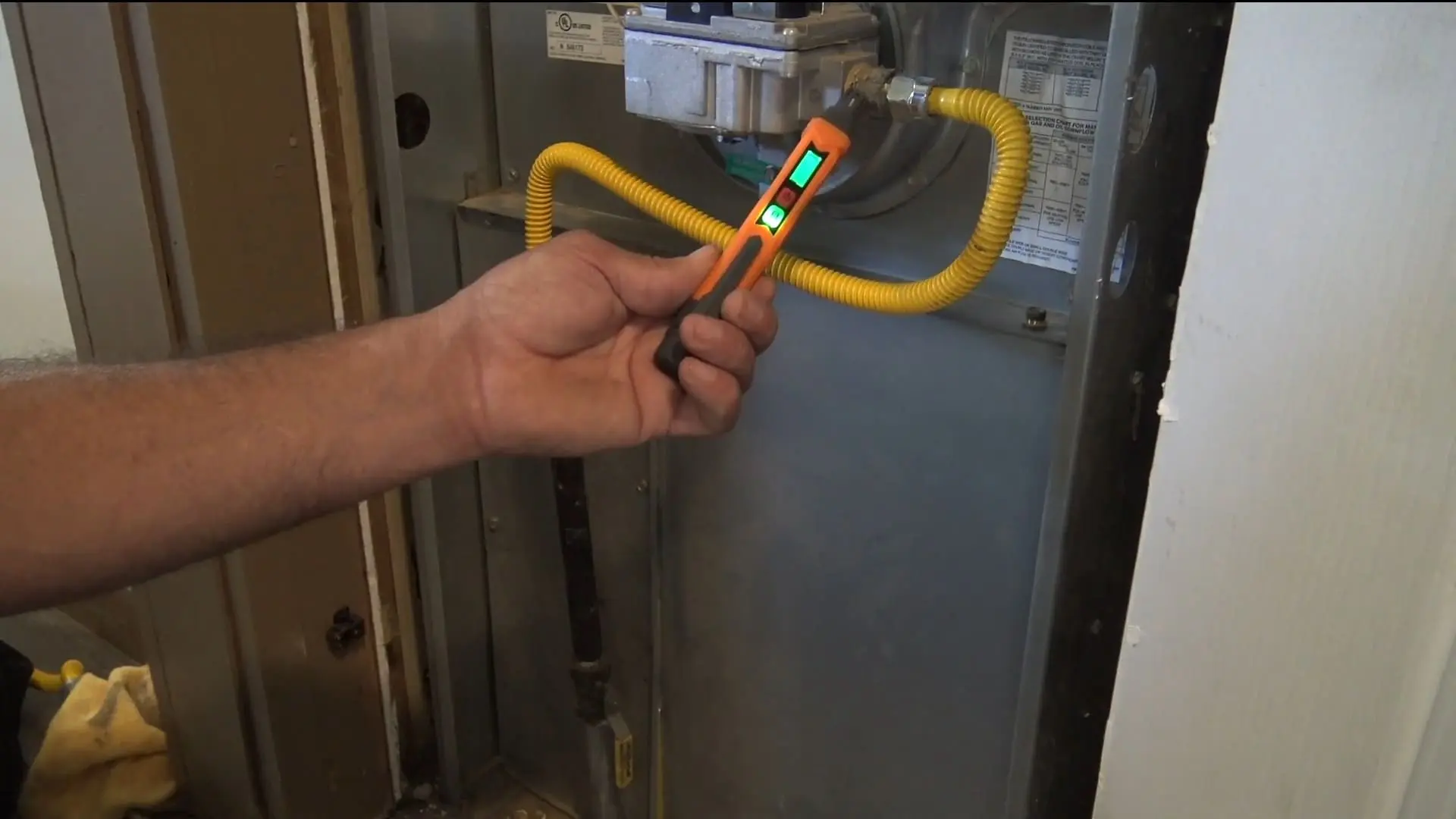 Combustible-gas sniffer at a furnace — the workhorse
| Instrument | What it actually reads | When we reach for it |
|---|---|---|
| Combustible-gas indicator (“sniffer”) | Methane as a percentage of the Lower Explosive Limit (%LEL). Natural gas ignites around 5% gas-in-air by volume — our instruments alarm at a small fraction of that, long before danger. | Every visit. The electronic gas detection Chicago crews trust starts high — gas rises — and traces every fitting, valve, and connection. |
| Manometer (pressure gauge) | Whether your piping holds pressure over time, and how fast it’s losing it. A falling needle is a leak talking — even one too small to smell. | Isolation testing: proving which branch leaks, and certifying the whole system after any repair. |
| Soap-bubble solution | The exact leaking thread. Old-school, visual, unbeatable for final pinpointing — bubbles don’t lie. | Confirming the precise fitting once electronics narrow the zone. Also our post-repair verification, every joint, every time. |
| CO analyzer | Carbon monoxide in parts per million — a different gas your combustible sniffer and your nose both miss entirely. | Any call involving a furnace, water heater, or unexplained symptoms. CO and gas trouble travel together often enough that we always check both. |
| Thermal imaging | Temperature differences — useful for tracing hidden pipe runs. Honest note: thermal cameras don’t see gas. Anyone selling thermal as a gas detector is selling the camera. | Mapping concealed piping before we open anything — so the hole we cut is the only hole we cut. |
| Tracer-gas testing | A safe, detectable gas introduced into an isolated line — for the one-in-fifty leak that hides from everything else. | Buried lines and sealed chases where standard methods narrow it down but can’t close the case. |
Can You DIY Gas Leak Detection Safely?
Partly — and the boundary matters. Here’s the honest split between what you can safely check yourself and where DIY quietly becomes dangerous.
| Task | DIY-safe? | The honest reality |
|---|---|---|
| Soapy water on an exposed, accessible fitting | ✓ Yes | Fine as a first look at a grill connector or visible joint. Bubbles = call a pro. No bubbles proves only that one spot, that one day. |
| Sniff test & symptom awareness | ✓ Yes | Free and valuable — but odor fatigue and odorant scrubbing mean “I don’t smell it” is weak evidence. Log patterns instead. |
| Plug-in gas & CO detectors | ✓ Yes | Genuinely recommended — mounted right (see below). They alert; they can’t locate, grade, or price anything. |
| Consumer “pen” sniffer from the hardware store | ~ Sort of | Can confirm something is there. Uncalibrated, no %LEL reading, no documentation — a hint, not an answer. |
| Pressure testing the system | ✗ No | Requires isolating the system, a calibrated manometer, and knowing what a passing test looks like. This is the line where DIY ends. |
| Opening walls to hunt a leak | ✗ No | Exploratory demolition finds drywall bills, not leaks. Isolation testing exists precisely so nobody has to do this. |
| Any repair, any fitting, any “just tighten it” | ✗ Never | Illegal on gas piping in Chicago without a licensed contractor and permit — and it’s how small leaks graduate to the incidents section of our homepage. |
How Does Our Chicago Gas Leak Detection Work?
The same sequence every time, because it works every time. The photo shows the moment “found it” becomes official: soap solution on a corroded joint, and the bubbles that end the search.
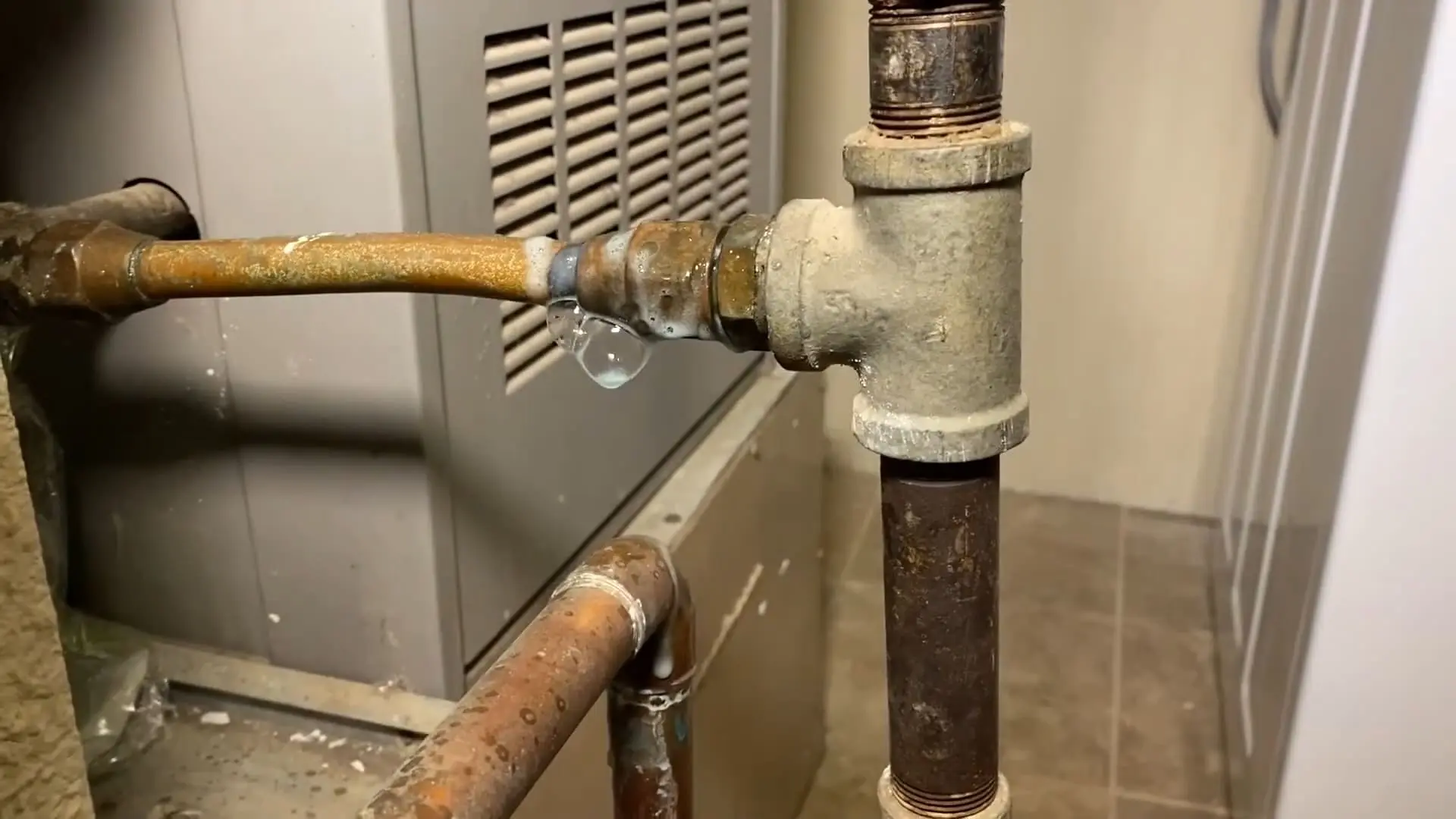 Bubble confirmation on a corroded joint
We interview before we instrument
When do you smell it? Which rooms? Worse in cold snaps, wind, or when the furnace kicks on? Intermittent leaks leave patterns — your answers cut the search in half.
Visual walk of the usual suspects
Meter set, risers, flex connectors, valve stems, flame color on every appliance. Decades of the same housing stock means the same ten places fail first.
Electronic sweep, ceiling down
Natural gas is lighter than air, so we sweep high first, then trace every fitting and run with the sniffer — readings logged as %LEL, room by room.
Pressure isolation with a manometer
If electronics say “somewhere in this zone,” the gauge says which branch. Sections valved off one at a time; the branch that can’t hold pressure is your answer.
Bubble-test the exact fitting
Soap solution on the suspect joints. Bubbles mean found. The difference between “your wall area leaks” and “this coupling, right here.”
Grade it, document it, price the fix
Written findings — readings, photos, locations, leak grade — plus a straight repair number and the permit path. Detection and repair stay separate line items: you decide, informed, never mid-crisis.
How Are Gas Leaks Graded — and Who Says So?
Leak grading isn’t our invention — it’s how the entire industry triages. Under the federal PIPES Act of 2020, Congress ordered pipeline regulators (PHMSA) to require advanced leak detection programs and grade-based repair schedules from gas utilities nationwide — the same pressure that’s pushing Peoples Gas to survey and fix faster. When we grade a leak on your side of the meter, we’re speaking the same language the utility and the regulators use.
GRADE 1 Existing hazard
Gas in or migrating toward a building. Immediate response, gas off, area cleared if needed. On our report, a Grade 1 comes with a same-conversation repair plan — this one doesn’t wait for a quote to age.
GRADE 2 Future hazard
Not dangerous today; guaranteed to be eventually. Scheduled repair, rechecked until fixed. Chicago’s freeze-thaw calendar is why we put dates, not vibes, on Grade 2 timelines.
GRADE 3 Monitored
Non-hazardous at current levels — the quiet bill-creep leak. Monitored and re-evaluated. Also the grade most likely to be found only because somebody finally tested instead of wondered.
What Has Neglected Gas Leak Detection Cost Chicago?
These aren’t hypotheticals — they’re documented events from this market, and they share one anatomy: gas accumulating where nobody was measuring, until it found an ignition source. Every single one was detectable first. That’s not hindsight talking; it’s what the instruments are for.
💥 A home leveled, a block damaged
In Calumet City, an unaddressed leak in an enclosed space met a spark — the blast destroyed the residence outright and damaged more than ten neighboring structures. Families displaced, a block changed, from a leak that instruments read in minutes.
🔥 The pattern that keeps repeating
Separate house explosions in Crestwood and Woodstock followed the same script investigators cite most: gas building out of sight, then a switch, a pilot, a spark. The phrase “it’s probably nothing” remains the most expensive sentence in this trade.
🏥 The quieter toll
CDC data ties hundreds of deaths and tens of thousands of ER visits to carbon monoxide every year, clustered in the same September–April months Chicago runs its furnaces — the reason this city ordered CO alarms near sleeping areas back in 1994, among the first in the nation.
Peoples Gas Checks Free — Why Pay for Detection?
Honest answer: two different jobs. The utility’s leak response — and the City’s 311 “Check for Leak” service — answers one question: is this hazardous right now? They survey, grade, and shut off what’s unsafe. What they won’t do is pinpoint which fitting inside your piping failed, hand you a written report, or fix anything past the meter. That gap is where every “the gas company came but didn’t fix it” story on every Chicago forum lives — and it’s exactly where we start.
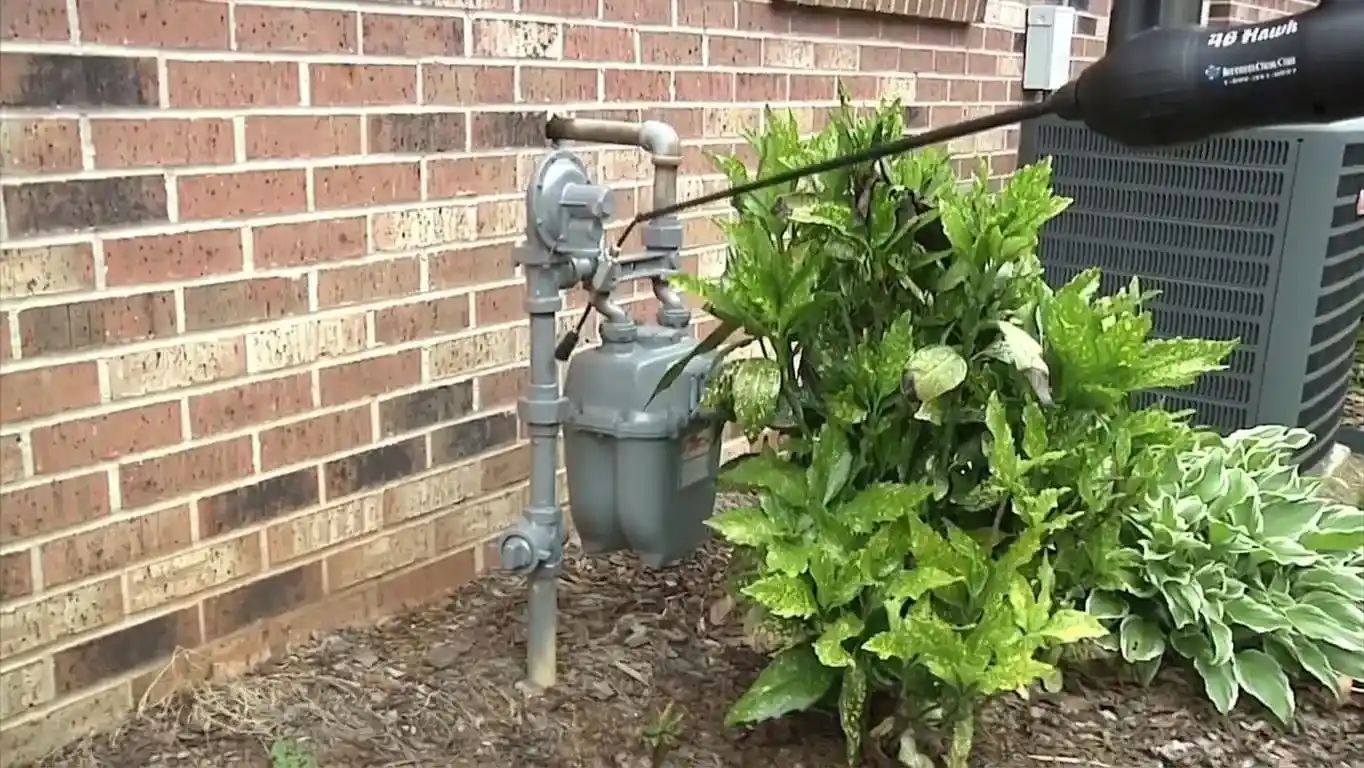 The meter: where their job ends and ours starts
| What you need | Peoples Gas / 311 (free) | GasGuard detection visit |
|---|---|---|
| Confirms gas is present & grades the hazard | ✓ Always call them first | ✓ Re-verified with our own instruments |
| Shuts off unsafe equipment | ✓ Including red tags | ~ We work the path back on |
| Pinpoints the exact fitting on your side | ✗ Not their job | ✓ The whole point of ours |
| Written report with readings & photos | ✗ | ✓ Every visit |
| Repair cost & permit path | ✗ “Call a licensed contractor” | ✓ Straight numbers, same visit |
| Unannounced periodic surveys | ✓ Legit — verify ID before entry | — We only come when called |
When Should You Book a Detection Visit in Chicago?
Chicago’s leak calendar is brutally predictable — CDC data even shows CO poisonings clustering in the same heating months, roughly September through April. Here’s the year as our dispatch board sees it.
| Season | What happens to gas systems | Smart move |
|---|---|---|
| September – October | First furnace fires of the year expose everything that loosened over summer; the pre-winter calm before the rush | BEST TIME TO BOOK Annual survey + combustion check, no queue, standard rates |
| November | Restoration-season crunch — shutoffs, red tags, and every detection company’s busiest weeks | If you waited: call early in the day. Timelines stretch, physics doesn’t. |
| January – February | Deep freeze stresses fittings in uninsulated walls; polar-vortex winters (2019, 2021) drove citywide failure spikes | Any smell, any hiss: emergency protocol. Intermittent signs: 24–48 hr detection. |
| March – April | The thaw shifts clay soil around buried lines that survived the cold; dead-grass season begins | Walk your service line path once the snow’s gone. One yellow strip = book buried-line detection. |
| May – August | Grill lines, patio heaters, renovations disturbing old piping; JULIE digging season | Pre-grilling-season checks; 811 before any post or patio; detect after any wall-opening reno. |
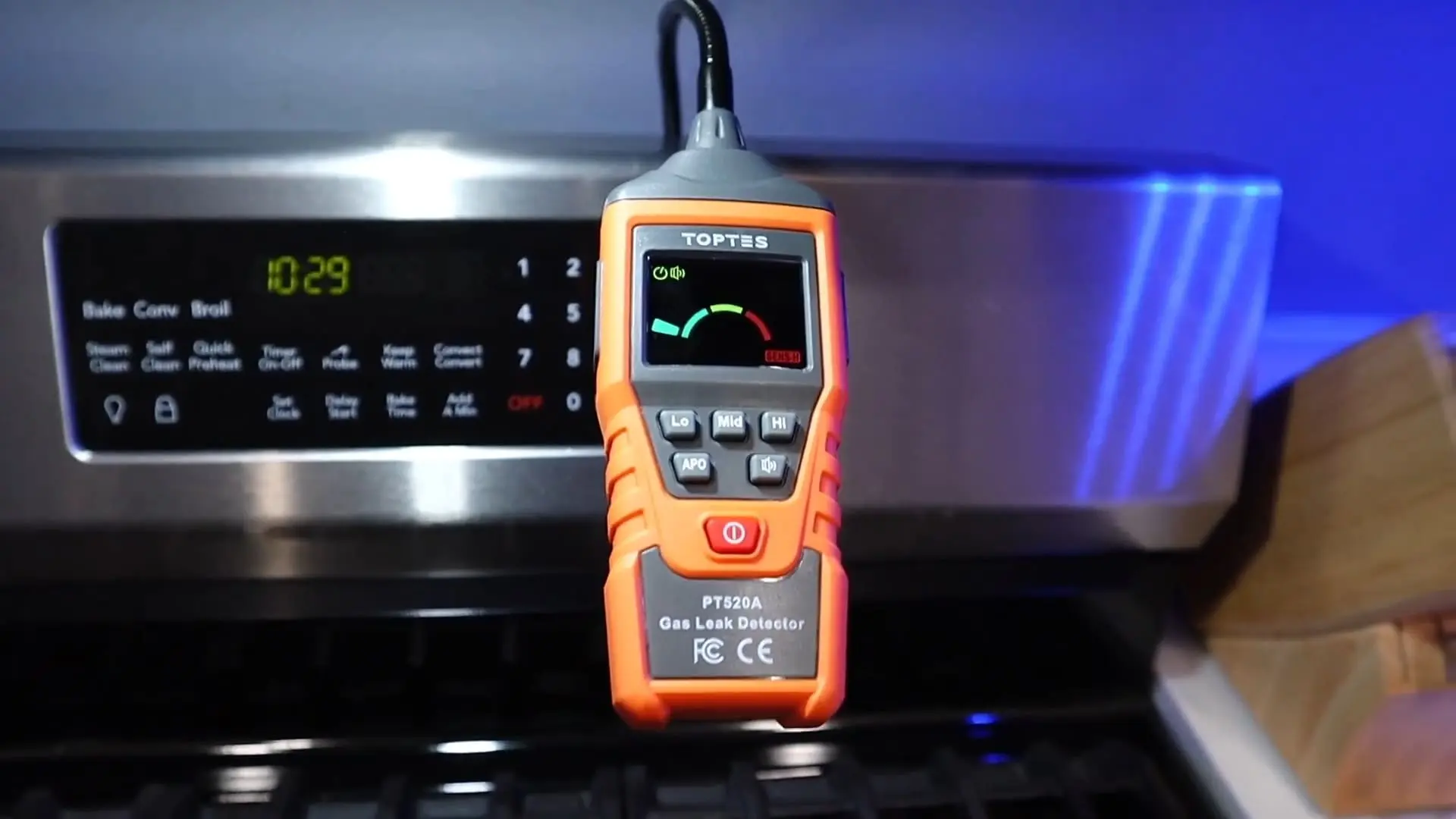 Home detectors help — if they’re mounted right
Should You Own a Home Gas Detector?
Yes — we’re pro-detector. A UL-listed natural gas alarm is cheap insurance in a pre-1960 building. But half the units the gas leak detection Chicago homeowners show us are mounted where physics guarantees they’ll never work. The gas decides the placement, not the nearest outlet.
- ✓Natural gas rises — mount methane detectors high on the wall or ceiling, near (not inside) the kitchen and mechanical room. A plug-in at ankle height is guarding the baseboards.
- ✓CO alarms are a separate device — required near sleeping areas by Chicago ordinance since 1994. A gas detector won’t catch CO, and vice versa.
- ✓Propane sinks — LP grill line or garage heater? That detector goes low. Same rotten-egg odorant, opposite physics.
- ✓A detector is a smoke alarm, not a mechanic. It says something’s wrong — never where, how bad, or what it costs. If it sounds: out first, calls second.
How Much Does Gas Leak Detection Cost in Chicago?
Most gas leak detection Chicago quotes hide behind “it depends.” It does depend — so here are the ranges it depends between, and exactly what moves the number, before we ever ring your bell.
| Detection service | Typical Chicago range |
|---|---|
| Standard pressure test (single system) | $75 – $150 |
| Full-home detection visit with written report | $150 – $400 |
| Extended pressure test (12–24 hr, where required) | up to $500 |
| Multi-unit / commercial survey | Quoted by riser count & square footage — before we start |
| Tracer-gas / specialty pinpointing | Added only when standard methods can’t close it — with your OK first |
| After-hours emergency detection | Standard rate × 1.5–2, disclosed on the phone |
What moves the detection price up or down
| Factor | Pushes cost down | Pushes cost up |
|---|---|---|
| Access | Exposed piping, unfinished basement | Finished walls, ceilings, tight crawlspaces |
| System size | Single-family, one meter, few appliances | Multi-unit risers, commercial kitchens, long runs |
| Leak behavior | Steady leak, reproducible on demand | Intermittent — may need testing under specific conditions |
| Location | Interior fitting or appliance connector | Buried service line — surface survey + sampling |
| Timing | Scheduled weekday, fall booking | Night, weekend, or the November restoration rush |
| Test type required | Standard pressure test passes clean | Extended 12–24 hr hold required by circumstances |
Detection Case Studies From Chicago’s Housing Stock
Representative cases from the patterns this city produces week after week — every Chicago gas leak detection engagement below follows the same arc: situation, method, finding, outcome. If yours matches one, the search is a known road.
The smell that only came at night
SituationFaint rotten egg in a second-floor hallway — windy nights only, gone by morning. Two utility visits found nothing active.
MethodOccupant log for one week, then testing during the trigger conditions; electronic sweep of the shared wall chase, branch isolation on the rear riser.
FindingRiser tee weeping only under cold-contraction — a classic intermittent, sealed at 40°F, talking at 15°F.
OutcomeGrade 2, scheduled repair, re-test clean.
The forty-dollar mystery bill
SituationNo smell, no hiss — just a gas bill up month over month with no weather to blame.
MethodManometer drop test on the full system: appliance valves off, gauge on, pressure logged over 30 minutes.
FindingSlow, steady loss — isolation traced it to a corroded union behind the dryer, below smell threshold for months.
OutcomeGrade 3 found, fixed same visit, bill back to normal the next cycle.
Ten days to closing, one flagged odor
SituationBuyer’s inspector noted “possible gas odor at meter” on a pre-war walk-up. Deal pausing, attorney asking for facts.
MethodFull sweep with logged %LEL readings, meter-set survey to split utility-side from unit-side, written report with photos.
FindingUtility-side seep at the meter connection — Peoples Gas territory, their fix, free.
OutcomeReport to both attorneys, utility notified, closing held its date.
Shut off, tagged — but where is it?
SituationPeoples Gas confirmed a leak somewhere in ninety feet of century-old black iron, shut the line, left the tag. Tenants without cooking gas, CRLTO clock running.
MethodBranch-by-branch isolation, then bubble confirmation on the two suspect joints the gauge indicted.
FindingOne failed coupling at a basement tee — ninety feet narrowed to nine inches.
OutcomeRepair, pressure certification, permit, utility restore — one chain, one company.
How to Vet Any Detection Company — Including Us
The top-rated gas leak detection Chicago deserves gets earned with instruments and documentation, not ad budgets. Our review pages go live with the business, and every review on them will come from a real Chicago address. Until then — here’s the six-question test we’d tell you to run on anyone, us included.
1. “Are you licensed for gas work in Illinois?”
Not “we’re insured.” Licensed, for gas piping specifically. A yes should come instantly and without hedging.
2. “What instruments will you bring?”
The answer should name a combustible-gas indicator, a manometer, and a CO analyzer without pausing. “A detector” is not an answer.
3. “What does %LEL mean?”
Anyone doing this work explains it in one breath. Anyone who can’t is reselling a subcontractor.
4. “Do I get a written report?”
Readings, photos, locations, grade. If findings live only in the technician’s head, they don’t exist.
5. “Is detection priced separately from repair?”
The honest answer is yes. Bundled pricing before diagnosis means the repair was sold before the problem was found.
6. “What if it turns out to be the utility’s side?”
The right answer: “Then it’s their fix, free, and we’ll document it for you.” Companies that can’t say this profit from your confusion.
Your Real Detection Options, Compared
Every option below has a legitimate job. Here’s which job each one actually does.
| What matters | GasGuard Chicago | Utility / 311 check | General HVAC co. | Plug-in detector |
|---|---|---|---|---|
| Cost | ~ $75–$400, published | ✓ Free | ~ “Call for quote” | ✓ One-time purchase |
| Pinpoints the exact fitting | ✓ That’s the job | ✗ Grades & isolates only | ~ Varies by crew | ✗ Alerts only |
| Written report with readings | ✓ Every visit | ✗ | ✗ Rarely | ✗ |
| Detection-first, repair separate | ✓ You decide, informed | — No repairs at all | ✗ Detection sells the repair | — |
| Works at 2 a.m. in January | ✓ 24/7, Chicago-only | ✓ Emergencies | ~ Answering service | ✓ Always on — if mounted right |
Our honest advice uses three of those columns: keep a properly mounted detector, call the utility’s free line the moment anything smells serious, and bring us in when the question becomes “where exactly — and what will it cost.”
Gas Leak Detection in Chicago: Questions, Answered
What are the first steps if I suspect a gas leak?
Strong smell: leave immediately — no switches, no phones indoors — and call Peoples Gas (1-866-556-6002) or 911 from outside. Faint, intermittent, or “not sure”: don’t ignore it and don’t hunt with a lighter (yes, it happens). Open a window, note when and where you smell it, and book a detection visit. The pattern you log is half our diagnosis.
How can I identify a gas leak in my Chicago home quickly?
Five fast checks: rotten-egg smell, hissing near pipes or the meter, a flame burning yellow instead of blue, plants dying in one spot, and a gas bill that climbed with no weather to blame. Two or more at once: treat it as real. None, but the worry won’t quit? That’s literally what a $75–$150 pressure test is for.
Who do I call for a gas emergency in Chicago?
Emergencies: 911 or the Peoples Gas emergency line, 1-866-556-6002 (Nicor territory: 1-888-Nicor4U). Non-emergency odor concerns can also go through the City’s 311 “Check for Leak” service. Once the hazard question is answered and it’s your side of the meter — that’s us.
How much does a professional gas leak inspection cost?
Chicago market: $75–$150 for a standard pressure test, $75–$150 for a full-home detection visit with a written report, up to $500 where an extended 12–24 hour test is required, 1.5–2x after hours — disclosed on the phone, not on the invoice.
Peoples Gas already checked for free — why pay for private detection?
They answered a different question. The utility determines whether a hazard exists and shuts off what’s unsafe — free, and always your first call. They don’t pinpoint which fitting failed, don’t produce a report, and don’t repair past the meter. We do all three.
Why doesn’t my buried gas leak smell like anything?
Odorant scrubbing — soil can strip the mercaptan warning scent out of gas as it migrates upward, so an underground leak can surface with no smell at all. That’s why buried-line detection runs on instruments and yard evidence (dead grass strips, bubbling water) instead of noses, and why “I don’t smell anything” proves nothing outdoors.
Can you find a leak behind a wall without tearing it open?
Almost always we can narrow it to a specific wall section without opening anything — electronic tracing plus branch isolation does the narrowing. Final pinpointing in a sealed cavity sometimes needs one small, deliberate opening. The difference between that and exploratory demolition is the whole reason detection exists.
Can you detect leaks in buried gas lines?
Yes — surface sweeps along the service path, sampling at suspect points, and the yard’s own testimony confirmed before anyone digs. JULIE (811) locates come first on every excavation; it’s Illinois law, and the Niles main strike is the permanent reminder why.
What does %LEL mean on your instruments?
Lower Explosive Limit — the minimum gas-in-air concentration that can ignite, roughly 5% by volume for natural gas. Our meters read as a percentage of that limit and alarm at a small fraction of it — detecting trouble at levels far below anything dangerous. That margin is the entire point.
Where should I mount a natural gas detector in my home?
High — wall or ceiling — because natural gas is lighter than air and collects overhead. Near the kitchen and mechanical room, not inside cabinets. CO alarms are separate devices and belong near sleeping areas (Chicago law since 1994). Propane detectors go low. Physics picks the spot, not the nearest outlet.
My detector went off but I don’t smell anything — false alarm?
Treat it as real. Odor fatigue dulls your nose to a smell you’ve lived with, some leaks sit below smell threshold but above sensor threshold, and if it’s a CO alarm there was never anything to smell at all. Ventilate, step out, get it checked — fresh batteries beat a tired nose.
I smell gas sometimes, but it disappears. Is that still a leak?
Very likely — and it’s the most common call we get. Intermittent leaks breathe with temperature, wind, and system pressure: a fitting that seals at 40°F weeps at 10°F. Keep a simple log of when and where, and we’ll test under the conditions that make it talk.
How long does a detection visit take?
Forty-five to ninety minutes for a typical single-family home; longer for multi-unit buildings with shared risers. You get findings, readings, and the repair path before we leave — not a “we’ll email you.”
Do I get a written report I can actually use?
Every visit: instrument readings, photos, exact locations, leak grade, and the recommended fix with a real number — written to be handed to whoever needs it next: the utility restore desk, your closing attorney, your insurance adjuster, or your landlord.
Is a small leak really worth finding — environmentally or financially?
Yes on both counts. Financially, a Grade 3 leak quietly inflates every bill until someone tests. Environmentally, methane is a far more potent greenhouse gas than CO2 — EPA figures put it around 28x over a century — so the leak you fix is waste stopped twice. And regulators agree: federal law now pushes utilities toward finding and fixing even the small ones faster.
How often should an older Chicago home get checked?
Pre-1960 buildings: once a year, ideally early fall before the heating season stresses everything — and always after an appliance swap, a renovation that touched walls, or any winter that made the news. A hundred-year-old two-flat has earned an annual hour of skepticism.
Gas leak detection Across Chicago’s Neighborhoods
Every job on this page runs the same across the city — and these neighborhoods have dedicated pages covering exactly how their housing stock behaves: Lakeview, Lincoln Park, Portage Park, Bridgeport, McKinley Park, Beverly, Morgan Park, Hyde Park, Logan Square, Avondale, Rogers Park, Edgewater, Jefferson Park, North Center, Albany Park, and Wicker Park. Anywhere else in Chicago: same published pricing, same-day response — one call covers the whole city.
Stop Wondering Where It’s Coming From.
Faint smell, climbing bill, a tag on the meter, or a closing on the line — every Chicago gas leak detection visit ends with the same three things: the exact source, a written report, and a straight number for the fix.
☎ Call (773) 200-2148 — 24/7 Licensed & insured in Illinois • Chicago-only service • Detection quoted separately from repair, always